A tonne of recovered material has little commercial value if it cannot find a buyer. Across the recycling industry, plastics are processed, waste-derived fuels are produced, and valuable resources are separated from discarded materials. Yet, the journey from recovery to reuse often encounters a critical obstacle: the absence of a dependable market.
The issue is not simply whether materials can be recovered, but whether they meet the quality requirements, price expectations and supply needs of industries capable of using them. Without these connections, even well-established recovery systems can struggle to turn recovered outputs into viable products. Closing this market gap is essential to making resource recovery commercially sustainable and advancing a circular economy.
Why Recovered Materials Struggle to Find Buyers
The availability of recovered materials does not automatically translate into demand. Recycled plastics, refuse-derived fuel (RDF) and other secondary materials must compete with conventional alternatives on price, performance, consistency and availability. When virgin materials become cheaper or industrial demand weakens, buyers may have less incentive to purchase recycled alternatives, even when their environmental benefits are well established.
The challenge is particularly evident in plastics. According to the OECD's Global Plastics Outlook, secondary plastics accounted for only 6% of global plastic production in 2019. The report identifies economic and quality considerations as important reasons industries continue to rely on virgin plastics. This demonstrates that increasing recycling capacity alone cannot create a strong market for recovered materials.
For recovery operators, the commercial questions are straightforward: who will purchase the output, in what quantities, at what price and against which specifications? Without reliable answers, recovered materials can accumulate in storage, tie up working capital and expose operations to fluctuating commodity prices. A stronger recovered materials market requires processors to understand downstream demand before deciding how materials should be recovered, processed and marketed.
Quality Standards Determine Commercial Value
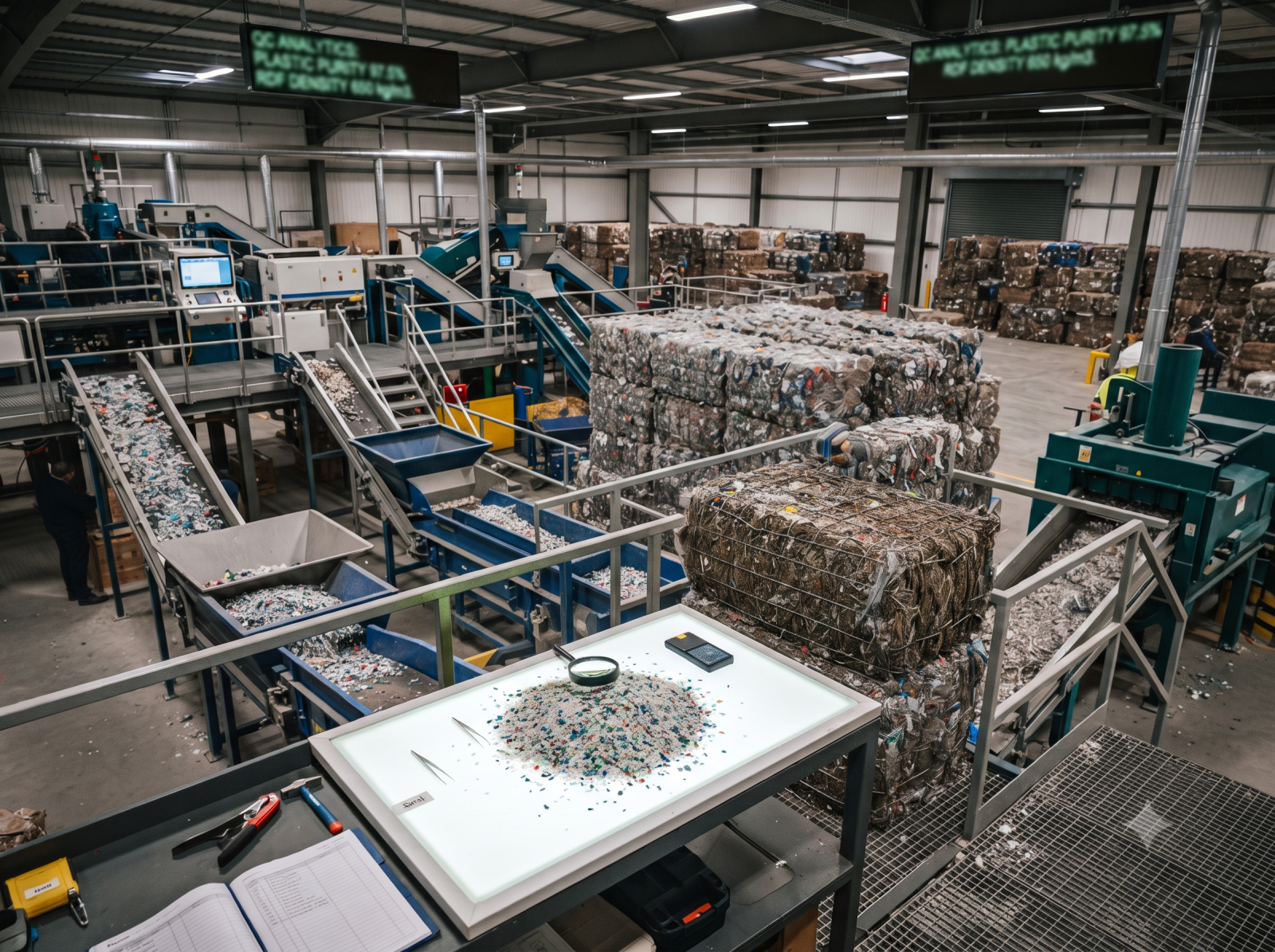
Recovered materials become commercially viable when buyers can depend on their quality. For recycled plastics, this involves managing polymer composition, contamination, moisture and other properties relevant to the intended application. Manufacturers may also require material testing, traceability and compliance with applicable product standards. If recycled material varies significantly between batches, manufacturers may face production disruptions or additional processing costs, making virgin alternatives more attractive.
RDF requires a different set of quality controls. Cement manufacturers and other suitable industrial users typically assess calorific value, moisture, chlorine content, ash and particle size against their equipment requirements and applicable regulations. Consistent fuel quality and dependable delivery volumes are important because variations can affect combustion performance, emissions management and operational efficiency. A commercially effective RDF market therefore depends on matching fuel production with the technical requirements of its intended users.
These considerations make product development as important as waste processing itself. Operators need to identify suitable end-use applications, establish quality-control procedures and provide buyers with reliable information about recovered outputs. Standardised specifications and transparent testing can reduce uncertainty, strengthen buyer confidence and help secondary materials compete more effectively with conventional resources. The objective is not simply to produce more recovered material, but to produce material that industries can use safely, consistently and economically.
Building Demand Through Circular Procurement
A dependable market needs committed buyers as much as it needs capable processors. Manufacturers can support demand by incorporating suitable recycled inputs into product specifications, while procurement teams can assess recovered materials against cost, quality, availability and sustainability criteria. Where commercially viable, longer-term supply agreements can help processors plan production and give buyers greater confidence in material availability.
This is where circular procurement becomes strategically important. By considering secondary materials alongside conventional raw materials, organisations can diversify sourcing options, reduce reliance on virgin resources where suitable substitutes exist and strengthen supply-chain resilience. However, purchasing decisions must account for total costs, product performance, regulatory requirements and continuity of supply. Sustainability objectives become commercially meaningful when recovered materials meet real operational needs.
Blue Planet Environmental Solutions' Annual Sustainability Report 2026 offers a relevant example of the scale at which material recovery operates. In FY2025–26, the company reported processing 44,833 tonnes of paper, 24,537 tonnes of plastics and 6,364 tonnes of iron and steel. These figures illustrate the substantial volumes of materials entering recovery systems and the importance of developing markets capable of absorbing them. They represent reported processing volumes, not independently established sales figures or confirmed offtake agreements.
For the wider industry, the opportunity lies in bringing processors, manufacturers and procurement teams together earlier in the recovery process. Clear specifications, demand forecasting and commercially appropriate supply arrangements can help align recovered-material production with actual market requirements. As recycled material demand becomes a more deliberate part of procurement planning, recovery operators can make better-informed decisions about processing investments, product quality and the applications they serve.
The success of the circular economy will depend not only on how efficiently waste is processed, but also on whether recovered resources can find consistent, commercially viable applications. Quality assurance, dependable supply, transparent pricing and stronger buyer relationships are essential to making resource recovery sustainable over the long term. Without these connections, valuable materials risk remaining outputs of a process rather than becoming inputs for another production cycle.
Closing the market gap requires a shift in perspective: recovered materials must be developed with their end-users in mind. For businesses, this means integrating circular procurement into sourcing strategies; for processors, it means aligning recovery capabilities with market needs. Blue Planet Environmental Solutions works across integrated waste management and resource recovery to support the transition towards more circular resource systems.
Explore Blue Planet Environmental Solutions to learn more about its solutions, or contact the team to discuss your resource recovery requirements.
 Food Waste
 Livestock Waste Solutions
 Agri Waste
 Waste To Energy Solutions
 Plastic Waste Solutions
 MSW Solutions
 Legacy Waste Solutions
 E-Waste Solutions
 Industrial Waste Management Solutions
 Hazardous Waste Solutions
 Restoration & Recovery Solutions
 Education & Awareness Solutions