The global quest for sustainable energy has reached a pivotal moment as nations encounter mounting pressure to reduce emissions, manage waste properly, and improve energy security. Organic waste, previously regarded as an inevitability of modern life, is on a fast track to be recognized as a potential resource capable of energising whole cities, industries and transportation networks. Over the past decade, scientific innovations and large-scale commercial projects have shown that municipal food scraps, agricultural residues, sewage sludge and used vegetable oil can be converted into advanced biofuels that significantly lower the greenhouse gas emissions over their entire life cycle. This transition is supported by robust statistics: global biogas and biomethane production has been growing steadily, the demand for biofuels is estimated to reach 200 billion litres by the year 2028 and stricter landfill reduction targets are being set by governments all over the world.
The mounting climate challenges and the fossil energy market's fluctuate, waste-to-biofuel pathways offer an option that is circular, resilient, and diverse in terms of technology for the generation of sustainable energy. Not only do they produce low-carbon fuels, but they also help in reducing methane emissions in landfills, provide financial support to rural areas, upgrade waste management systems and aid industries in meeting their ESG and net-zero commitments, which are becoming stricter. The advanced technologies like hydrothermal liquefaction, cutting-edge anaerobic digestion, and renewable diesel refining are gaining traction; what was once only a marginally effective sustainability solution is now converting into a transformational pillar of the global green energy transition.
The toolbox: technologies turning organic waste into fuels
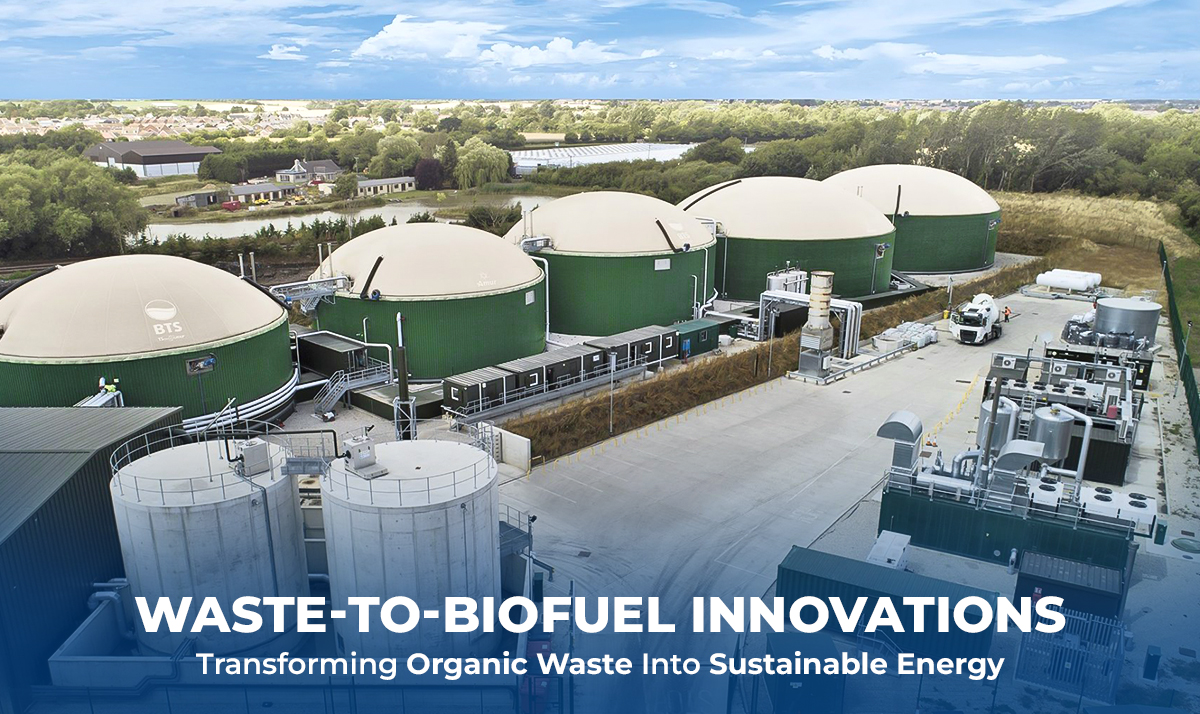
Organic waste can become a source of fuel through various scientific methods, which are appropriate for different types of feedstocks and production scales. The process of anaerobic digestion involves the microbial breakdown of organic matter, the result of which is biogas (a methane-rich gas), and this biogas can be further converted into biomethane for heating, electricity, or as a fuel for vehicles; the biological method in this case is very well-established and is being practiced in large number across municipal wastewater treatment facilities, farms, and industrial sites. Aimed at using up all the waste by using thermochemical processes- namely, hydrothermal liquefaction (HTL) and further gasification followed by Fischer-Tropsch synthesis or methanation, the latter can turn not only wet but also mixed municipal solid waste and agricultural residues into liquid biocrude or syngas that can be refined into renewable diesel and sustainable aviation fuel. On the other hand, the chemical path, such as transesterification, is still the chief commercial method for biodiesel production from used cooking oil and other lipid wastes. Recent research, peer-reviewed findings, and pilot projects (including successful HTL trials on municipal waste in 2023-2024) have demonstrated that these methods can yield higher-value liquid fuels from feedstocks that are otherwise expensive to manage.
Scale and impact: what the numbers tell us
Biofuels have actually moved from boutique projects to material contributors to energy systems. In 2022, biofuels supplied over 3.5% of the total transport energy demand and they have been growing about 6% per year over the last few decades. The IEA's latest report anticipates that in the next five years, about 38 billion litres more of biofuels will be consumed, which would bring the total demand to nearly 200 billion litres by 2028. Ethanol has continued to be the most significant liquid biofuel worldwide, with its production globally amounting to about 116 billion litres in 2023. On the gaseous side, Europe’s total biogas and biomethane produced is 22 billion cubic meters, which is about the same as the gas consumed by some of the smallest EU nations and it is evident that biomethane is applicable to fossil gas. Waste-derived bioenergy numbers show that the system is more than just a convenience; it is becoming a solution.
Industry, policy and real-world pilots driving adoption
Momentum is a result of corporate strategy and government policies regarding engineering. The government is revising the regulations around the use of biofuels so that the waste-based feedstocks will be given preference and higher blends in transport, as well as aviation will be incentivized, while the regulators are putting tighter restrictions on landfill disposal and, at the same time, they are stimulating circular waste value chains. The energy giants and the oil companies are reacting to the situation: already in the late 2020s, investments and mergers to the tune of over forty projects focusing on biofuels and sustainable aviation fuel by 2030 were made public by the big oil and gas companies, which indicated that private capital is now entering the markets dealing with waste-to-fuel. Wastewater and sugar plants, for example, are turning sludge and press mud into biomethane or compressed biogas for local use; airports and airlines are setting out a timeline for SAF uptake, often dependent on waste feedstocks like used cooking oil, agricultural residues and municipal waste oils. In a national context such as India, the government reports and policies during 2022–2024 pointed out the enormous latent capacity to produce biofuels via waste streams to an extent (largely from used cooking oils, industrial organic residues) if supply-chain aggregation and feedstock quality management are scaled up. The studies reiterate that, by forgoing the establishment of cropland for energy crops, it will be possible to open up waste sources which would account for much of the growth in India.
Challenges, economics and the road ahead
Turning organic waste into dependable and cost-competitive fuels requires solving logistics, regulations, and economic puzzles. The irregularity of feedstock and its limited availability during certain seasons will force the companies to pay more for collection and preprocessing, while the contamination of oil or mixed municipal waste will certainly complicate their conversion and possibly increase the operational costs. The capital needed for the thermochemical plants is one of the reasons why the cost of these plants remains high, especially when compared with fossil fuels. The learning curves of the technology, higher carbon prices, and landfill bans alongside renewable diesel mandates are all factors reshaping the economic picture. Integration into the current waste management and wastewater systems will not only reduce costs but might actually boost the project's financing. Policy clarity around sustainability criteria, feedstock aggregation incentives, and investment in local pilot projects to prove supply chains will determine the speed at which waste-to-biofuel goes from a few scattered successes to a mainstream energy supply.
The journey from organic waste to biofuel is one of the most effective and beneficial ways to reduce the carbon footprint of future generations. This not only turns waste into a new source of energy but also brings together various needs that require to be met, such as climate change prevention, less dependence on landfills, cleaner urban areas, rural areas' economic development, and corporate sustainability objectives. The waste-based fuel technology is also moving forward and stepping up with policy incentives, municipal pilots, and private-sector investments and waste-derived fuels are bridging critical gaps in hard-to-abate sectors like aviation, long-haul transport, and industrial heating.
The approach that the industry will take from now on has to be characterized by a commitment to the strategy of waste-to-fuel forever. The feedstock collection systems, regulatory consistencies, waste technology cooperation between existing infrastructures, and financing models are all determinants that will decide how well nations will be able to realize the full potential of waste-to-biofuel systems. Data being harvested from the past few years, ranging from Europe's escalating biomethane output to a worldwide increase in biofuel demand, is an assurance that the globe is heading in the right direction. The next decade, given that adequate coordination in action is in place, could see organic waste being considered not as a nuisance but rather as one of the main renewable energy sources that will drive a circular, climate-resilient global economy.
 Food Waste
 Livestock Waste Solutions
 Agri Waste
 Waste To Energy Solutions
 Plastic Waste Solutions
 MSW Solutions
 Legacy Waste Solutions
 E-Waste Solutions
 Industrial Waste Management Solutions
 Hazardous Waste Solutions
 Restoration & Recovery Solutions
 Education & Awareness Solutions