India is facing a major challenge in its journey towards sustainable development, where the pressing challenges of organic waste management meet the urgent need for clean energy solutions. The rapid rise in the number of biogas plants in recent years in India demonstrates the country's commitment to the use of sustainable energy, changing the perception of waste from something unusable to a resource with energy value. The installation of more than 5 million biogas units throughout the country has made India one of the world's largest producers in the global renewable energy field and a source of hope for the double victory of curbing environmental issues and ensuring energy security simultaneously.
The significance of this transformation cannot be overstated. Biogas technology, which is still grappling with the issue of waste management in India, is not only a major solution for waste disposal but also a complete package that includes the prevention of pollution from landfills, the generation of energy from waste, the creation of jobs in rural areas, and a significant contribution to the country's climate goals. The organic waste management strategy that India has embraced is truly revolutionary because it not only prevents pollution and creates energy but also provides the main source of power for the development of rural areas and indirectly gets the country closer to its climate targets.
The Current Landscape of Biogas Development in India
The biogas industry in India has gained phenomenal growth and has now become a significant part of the country’s renewable energy strategy. The commitment of many big corporations with billions of dollars to the development of the sector has propelled the investment in biogas plants in India to levels never before seen. The market valuation at present is USD 1.5 billion, and is projected to grow to USD 3.49 billion by 2032, according to a five-year historical analysis, which is an indication of the strong potential of the sector and the confidence of the investors.
The development of infrastructure has been wonderful in equal measures. India is operating more than 5 million biogas plants and has also set up 108 Compressed Biogas (CBG) plants. The production and distribution of CBG India have increased tremendously with government help and are now available in 64 areas through 350 retail outlets. This wide network is an affirmation of the practical use of waste-to-energy India solutions on a large scale.
Government Initiatives Driving the Biogas Revolution
The success of biogas plants to thrive in India is greatly influenced by the extensive support provided by the government through various flagship programs. The GOBAR-Dhan initiative, considered the main component of the waste-to-energy plan in India, has been an excellent contributor since its inception; it has helped in turning organic waste into useful resources while improving rural communities in terms of livelihood. The GOBAR-Dhan project has rural people turning organic waste into valuable resources of energy. They are in a sustainable model that not only saves the earth but also helps the local economy.
Another important government initiative is the Sustainable Alternative Towards Affordable Transportation (SATAT) program, which is considered another crucial pillar of the government's support that aims at the establishment of 5,000 large-scale biomethane plants by 2030. The plan is to get to the 5% CBG blending target by 2028-29, starting from mandatory blending in 2025-2026 and advancing in steps from 1% to 5% in the following years. The government schemes for biogas plants in India encompass thoroughgoing policy support and a set of incentives that are designed to speed up the growth of the sector. The New National Biogas and Organic Manure Program (NNBOMP) is an example of such an initiative that offers technical help, financial incentives, and assistance with infrastructure development. Priority sector status has been granted to biogas projects under these programs, thereby enabling easier and more cost-effective financing for the developers and entrepreneurs in the sector.
Moreover, the policy framework brings forth certain milestones that are in line with the renewable energy targets set for India as a whole. A 20% ethanol blending target by 2025-26, 5% biodiesel blending by 2030, and 5% CBG blending by 2028-29 are the benchmarks set for biofuel integration into India’s energy mix, thus making a roadmap clear.
Technology Innovation and Implementation Success Stories
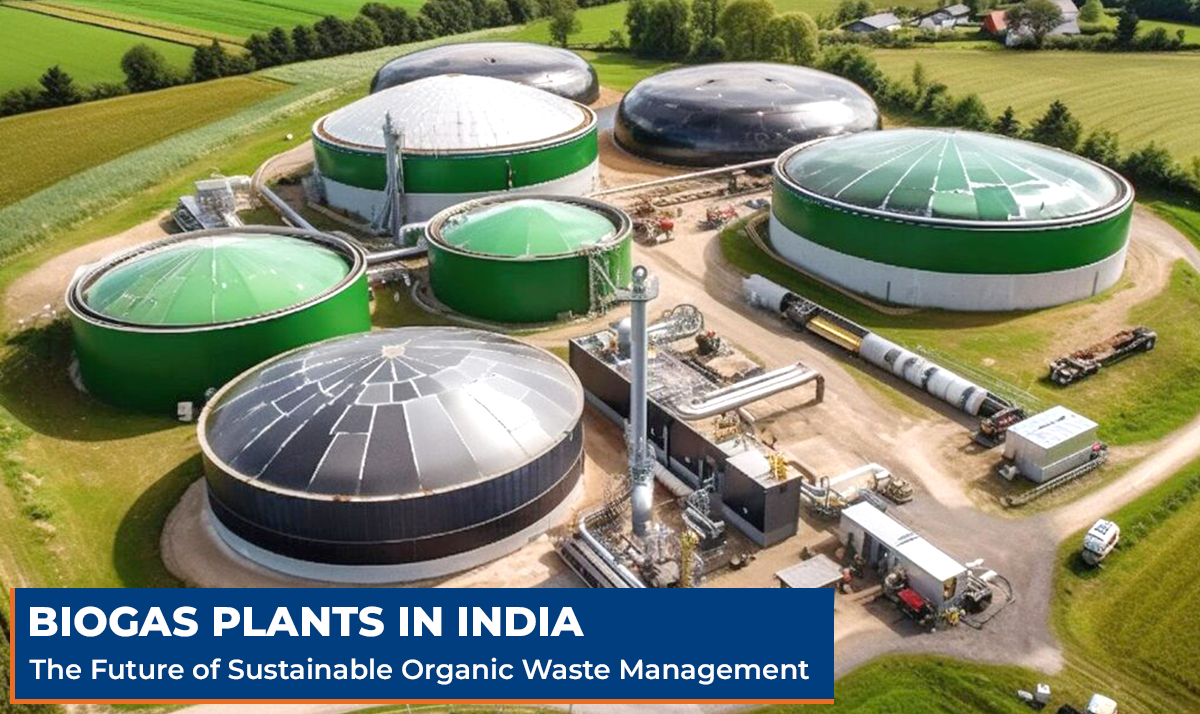
In India, advanced biogas technology has made a huge leap forward, putting in place a series of innovations that not only help the process but also maximise the output. The power plants for biogas that India has built so far greatly add to the renewable energy capacity of the country, because of very sophisticated anaerobic digestion processes that can take in a wide range of feedstock materials, such as agricultural and animal residues, as well as organic waste from the municipalities. One of the earliest and most successful environmental projects, the EverEnviro Resource Management biogas facility in Indore is processing 500 tonnes of organic waste every day to get biomethane as its final product. The facility shows that indeed the modern power plants in India can produce a lot of energy from the waste created by organic resources, and thus they are becoming a model for similar plants all over the country. Not so long ago, two more projects – the Hapur CBG Plant and the Verbio India Biogas Plant – were to be mentioned, which have also been using different feedstock sources for increased productivity.
The technological advancements have been taken over by the commercial biogas plants in India, which have greatly improved the efficiency of the operation and the economic aspect of the business. The plants are fitted with automatic feeding systems, and also systems for advanced monitoring and control and sophisticated gas purification technology that makes sure the output is safe and the quality is always high. The association of Internet of Things sensors with data analytics has made it possible to carry out real-time monitoring and preventive maintenance, thus minimizing the cost of operation and, at the same time, increasing reliability. India’s commercial biogas plants segment has experienced a phenomenal growth curve, assisted by government backing and private capital inflow. Standardization of design and technology has become a trend, thereby leading to the quick establishment of plants in different areas, even with the use of varying feedstock, and this also stands true in the case of India.
Economic Impact and Investment Opportunities
The development of biogas represents a major shift in the economic landscape of India, particularly in the waste-to-energy sector. Rural areas adopting biogas technology are generating employment, and farmers are benefiting financially by producing feedstock for the bioenergy plant. The investment in biogas plants, which generally costs around ?1,125-1,200 million for a 15-tonne-per-day capacity, is now a more attractive option. The capacity ensures that the project remains economically viable, while the price fixed at 85% of the average retail CNG price gives it an advantage over the competitors.
The sector's major stakeholders, both local and foreign, are pouring money, which will, in turn, help the manufacturers of equipment, providers of technology, and construction companies to grow. Moreover, the distributed energy systems not only lessen the dependence on the external sources but also the farmers and the community will get clean cooking fuel and organic manure from the digestate, thus creating multiple value creation from one installation.
Environmental Benefits and Climate Goal Alignment
The utilization of biogas and its development is a key factor in supporting India’s ambitious climate commitments and sustainable development goals. It also plays a significant role in the renewable energy sector and the 500 GW target capacity by 2030, with current biopower capacity being 11.6 GW.
The organic waste management with biogas technology involves the landfill diversion of organic waste, which in turn leads to a reduction in methane emissions and the generation of useful power via anaerobic digestion. The concept of a circular economy is herewith created, where nutrients are being recycled back to agriculture, locally producing energy while reducing transportation costs and emissions. Biogas has a critical place in the decarbonization scenario of India by 2070, energy independence, and proper waste disposal. Each biogas plant contributes to reducing fossil fuel dependency, thus making the whole process more eco-friendly.
Addressing Challenges and Building Solutions
The biogas sector, although it has made advancements, still struggles with issues that need the involvement of all parties concerned. Smaller developers and rural communities are facing capital costs as an obstacle. The absence of a comprehensive CBG grid is a limitation on distribution, and the quality of feedstock has a negative effect on performance and viability.
One of the technical problems is that there is no skilled labor in rural areas, so the efficiency and economic return of the plant are affected. Sourcing delay of equipment might increase the cost. There are already solutions being put into practice and one of them is getting customs and GST exemptions, which are to be believed to lower costs. In addition, skill development programs are also being implemented to build a strong local expertise. Standardized designs and different market initiatives for the by-products, such as digestate, are improving the economics of the project while enhancing the operational protocols and systems for feedstock management as well.
Future Prospects and Renewable Energy Integration
The future of the biogas industry in India appears exceptionally promising. Major targets and the government backing are the factors supporting growth. The target is to build 750 CBG plants by 2028 and to have a total renewable energy capacity of 500 GW by 2030.
By 2030, the forecast is for a 45% rise in bioenergy from 2023; thus, biogas will become an essential part in the process of India’s renewable energy transition. The #MakingBiogasHappen (MBH) program and the Global Biofuels Alliance are among the international initiatives that help in the sharing of knowledge and support. The combination of biogas with other green technologies brings about grid stability and energy security. The future will most probably be about increasing efficiency, cutting down on costs, and working on technologies such as power-to-gas systems and biogas upgrading for higher economic returns.
The approach of India to biogas technology for organic waste management has undergone a remarkable transformation that demonstrates the effectiveness of coordinated policy support, technological innovation, and private sector participation. India, with more than 5 million biogas plants in operation and a market value of over $1.5 billion, is now recognized as the world's leader in biogas development and application. Government support from programs such as GOBAR-Dhan, SATAT, and NNBOMP has comprehensively created an ecosystem that not only attracts investments and innovations but also helps in tackling the problems developers and communities encounter. The success stories from plants like EverEnviro Resource Management in Indore corroborate the practical applicability of biogas technology at large-scale commercial levels.
The energy produced by the biogas plants is not the only economic benefit; it also creates jobs, improves the situation of rural communities, and creates new value chains that bring profit to more than one party. As a result, the environmental advantages not only cohere with India's climate commitments but also aid in reducing global warming gas emissions and the proper handling of organic waste streams. Biogas plants will be much needed in India to get the 2070 target of net-zero emissions and the ambitious renewable energy goals. The development of the sector and its support from new technologies and policies place biogas as a vital element of India's sustainable future.
The journey toward comprehensive organic waste disposal with biogas technology is not only about environmental problem solving; it means India's dedication to innovation, sustainability, and inclusive development that reap benefits for the communities, the economy, and the environment altogether. The full potential of biogas technology is being tapped and the organic waste management of the future in India is already being created today.
 Food Waste
 Livestock Waste Solutions
 Agri Waste
 Waste To Energy Solutions
 Plastic Waste Solutions
 MSW Solutions
 Legacy Waste Solutions
 E-Waste Solutions
 Industrial Waste Management Solutions
 Hazardous Waste Solutions
 Restoration & Recovery Solutions
 Education & Awareness Solutions